Maxtec and Perma Pure are now united under Salaera. → Learn More

Maxtec and Perma Pure are now united under Salaera. → Learn More
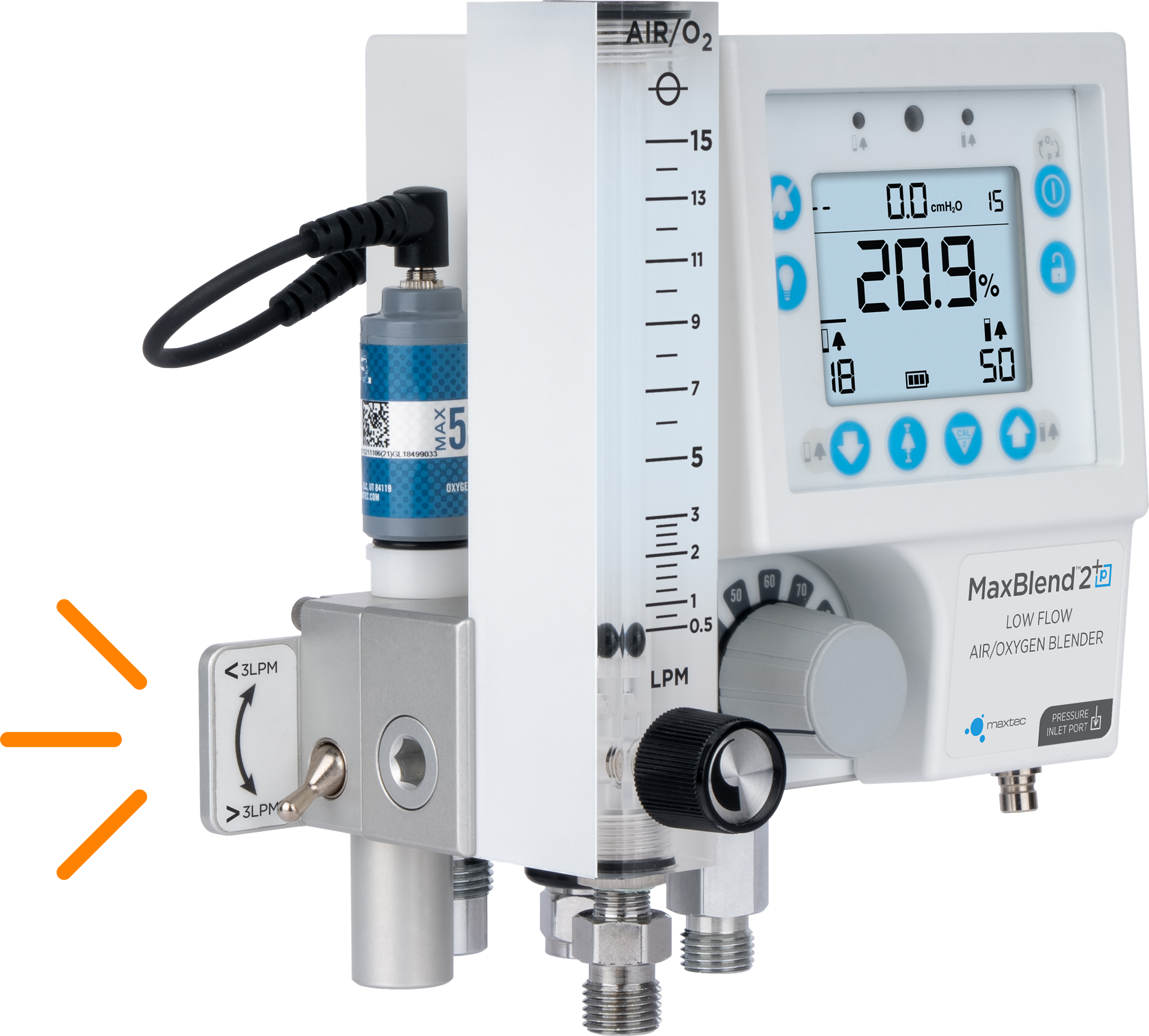
Use the calculator below to see how much your facility might save in the cost of wasted gas by using the MaxBlend 2 compared to using industry-standard blenders.
-$48,259.94
Money wasted annually on O2 bleed w/ generic blender
$30,236.72
Money saved annually using MaxBlend 2 gas bleed switch
$604.73
Money saved per bed annually
Air-oxygen blenders used in respiratory care “bleed” gas in an effort to maintain FiO2 prescription accuracy when delivering low flows. As long as a blender is connected to oxygen and air gas sources, it will bleed when idle and when in use on a patient.
With low flow blenders, this bleed rate can be as high as 3 LPM.
Example:
A clinician is delivering 4 LPM of FiO2 to a patient with a low flow blender. During this time, an additional 1 LPM of blended gas might be lost to gas bleed. When the patient is done being treated and they are no longer connected to the oxygen delivery set-up, the blender will continue to bleed gas at a rate of up to 1 LPM (assuming oxygen and air gas sources stay connected to the blender). This means there is a gas bleed even when the blender is not in use.